Made in the USA

Secure Your Workplace with Industrial Toeboards

Unprotected edges, floor openings, and exposed grating create serious fall hazards in industrial environments. Properly installed toeboards act as a solid barrier at the floor level of elevated platforms, scaffolds, and walkways, helping prevent falling objects and protect workers below.

Under OSHA standard 1910.28, employers must provide protection for employees exposed to fall and falling object hazards. That includes guarding open sides of floors, platforms, and runways that are four feet or more above a lower level. Intrepid Industries designs durable industrial toeboards that help facilities strengthen their guardrail system and improve compliance.

topline
toeboards

toeboards

bottomline

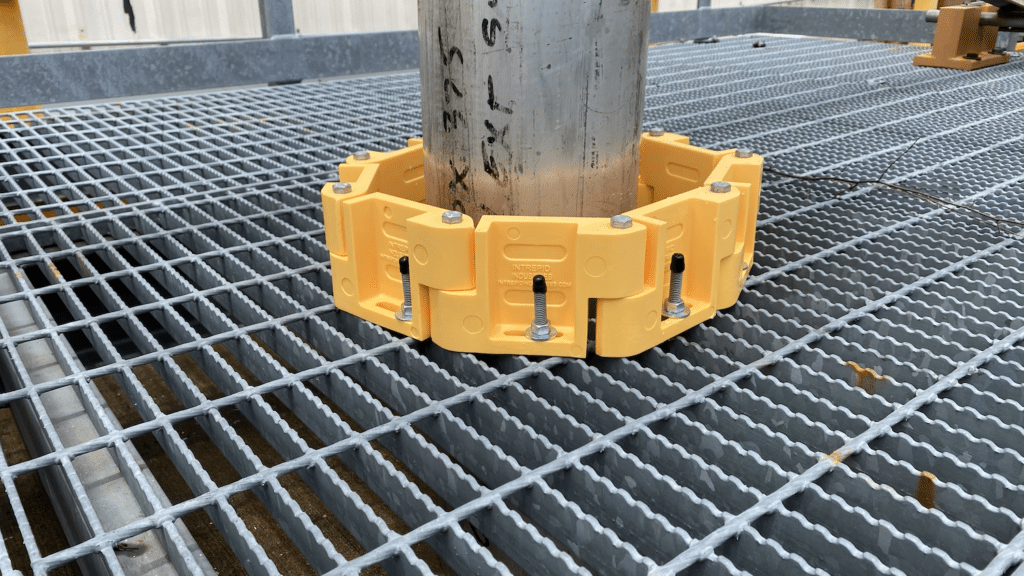
Our Toeboard Links, known as T5 links, are designed to close unwanted gaps and penetrations along grating edges and walking surfaces. These safety toeboards bolt directly onto grating without welding, making installation efficient and reducing downtime during maintenance or retrofits.

Unlike many metal toeboards that may corrode or require cutting and welding, T5 links are molded from rigid polyurethane that resists weather, chemical exposure, and outdoor conditions. They are ideal for mezzanine toeboards, elevated platforms, and industrial walkways where fall protection toeboards are required.

Unlike many metal toeboards made from steel or wood that may degrade over time, T5 links provide long-term durability in construction, marine, refinery, and manufacturing environments. They help prevent tool drops, falling debris, and equipment from slipping off the top edge of elevated surfaces.

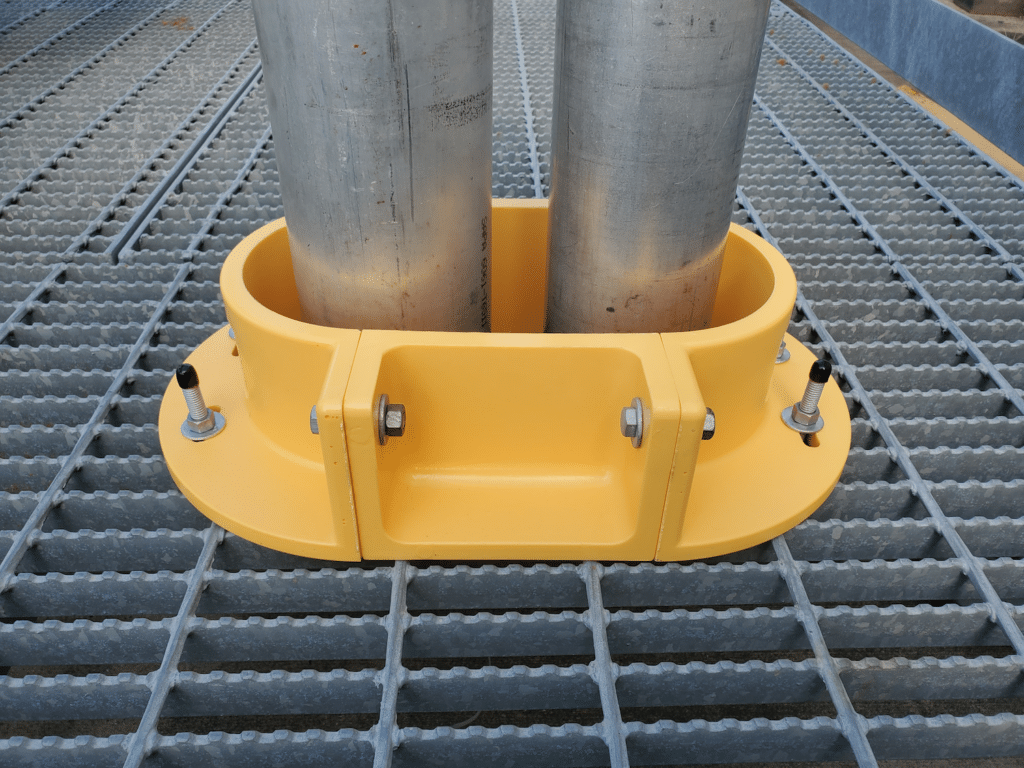
Grating Collars are designed to enclose circular openings in walking-working surfaces where pipes penetrate through platforms. These openings present both fall hazards and falling object risks if left exposed.

The GPC-6 secures around 6-inch penetrations and bolts directly from the top side of the grating. For larger openings, the GPC-X extends coverage to match the required size. These OSHA compliant toeboards help eliminate gaps that could allow tools, debris, or materials to fall to a lower level.

Manufactured from rigid polyurethane, GPC collars resist corrosion and outdoor exposure. They provide a clean, secure solution for industrial fall protection accessories where metal components may degrade over time.

tpline

Meeting OSHA Toeboard Requirements

btline

OSHA toeboard requirements define specific construction and performance standards. Toeboards must:

  • Be a minimum of 3.5 inches high from the floor to the top edge

  • Be solid or have openings not greater than 1 inch in the greatest dimension

  • Have no more than 1/4 inch clearance above the walking surface

  • Be capable of withstanding 50 pounds of force in a downward or outward direction

  • Be securely fastened to prevent displacement

Toeboards are classified as part of a guardrail system and are mandatory on open sides of elevated work platforms, scaffolds more than 10 feet above lower levels, and floor openings such as hatchways and skylights.

If materials are stacked above the top edge of the toeboard, additional screening must be installed up to the midrail or top rail. Intrepid’s polyurethane systems help facilities comply with these standards while reducing long-term maintenance.

Applications Across Industrial Environments

Toeboards are essential safety barriers for:

  • Mezzanines and elevated work platforms

  • Loading docks and vehicle pits

  • Construction sites

  • Roof edges on flat and low slope roofs

  • Guardrails protecting exposed walkways

On low slope roofs and elevated platforms, toeboards provide a physical barrier that helps prevent slips and falling tools at the leading edge. They act as a kickplate, blocking debris and materials from reaching employees below.

In each application, properly installed industrial toeboards reduce injury risk and improve overall safety performance.

topline

Benefits of Our Toeboard Solutions

btmline
0109e40249c0a48cab075395de36d59e

Enhanced Workplace Safety

Properly installed workplace toeboard systems reduce the risk of falling tools, materials, and debris from elevated platforms. By enclosing gaps and penetrations, our industrial toeboards help protect workers operating below mezzanines and elevated structures.

0109e40249c0a48cab075395de36d59e

OSHA Compliance Support

OSHA toeboard requirements specify that elevated platforms must include protective measures to prevent objects from falling to lower levels. Our fall protection toeboards are designed to help facilities align with these standards and maintain compliance during inspections.

0109e40249c0a48cab075395de36d59e

Versatile Applications

Whether securing mezzanine toeboards, reinforcing industrial grating, or enclosing pipe penetrations, our T5 links and GPC collars provide adaptable solutions. These adjustable toeboards integrate seamlessly with existing guardrail and grating systems.

0109e40249c0a48cab075395de36d59e

Long-Term Durability

Unlike many metal toeboards that may rust or require ongoing maintenance, our polyurethane solutions resist corrosion, UV exposure, and chemical contact. This durability makes them ideal for refineries, manufacturing plants, marine facilities, and other industrial environments.

Why Choose Polyurethane Over Metal Toeboards?

Traditional toeboards are often made from wood or metal such as steel or aluminum. While metal toeboards offer strength, they may corrode, require welding, and increase installation complexity.

Intrepid’s polyurethane systems are lightweight, corrosion resistant, and easy to bolt into place. They eliminate the need for hot work permits and reduce downtime during installation. The result is a durable, stable solution that supports compliance and long-term protection in harsh industrial settings.

Frequently Asked Questions

What are OSHA requirements for toeboards?

OSHA requires toeboards on elevated walking-working surfaces to prevent falling objects and protect employees below. They must be at least 3.5 inches high, solid or limited to 1-inch openings, and capable of withstanding 50 pounds of force. Contact us to discuss compliance for your facility.

Are your toeboards OSHA compliant?

Yes. When properly installed, our industrial toeboards support OSHA 1910.28 requirements for falling object protection and fall hazard mitigation. They help enclose openings and strengthen guardrail systems.

Where are toeboards typically required?

Toeboards are required on open sides of elevated floors, mezzanines, platforms, scaffolds, and around floor openings such as hatchways or skylights. They are also used on flat and low slope roofs where falling object protection is necessary.

How do your toeboards prevent falling objects?

Our toeboards act as a solid barrier at the edge of elevated surfaces. They block tools, debris, and materials from sliding or being kicked off the platform, helping protect workers and equipment at lower levels.

Are polyurethane toeboards durable in harsh environments?

Yes. Unlike some metal toeboards, our polyurethane systems resist corrosion, chemical exposure, and outdoor conditions. They are designed for long-term performance in demanding industrial environments.

Strengthen Your Fall Protection System

Toeboards are a key element in providing a safe working environment. By enclosing exposed edges and floor openings, they reduce fall hazards, prevent falling objects, and help employers meet OSHA requirements.

If you need help selecting the right workplace toeboard systems for your elevated platforms, loading docks, or industrial walkways, contact Intrepid Industries today for expert guidance or a custom request.