
Houston, Texas | August 17, 2020
If your walking-working surfaces are elevated more than 4 feet above a lower level, OSHA requires appropriate fall protection systems to help protect workers from serious injury. One of the most common solutions is the use of an OSHA-compliant safety swing gate at ladder openings, elevated platforms, and other locations where fall hazards exist.
Understanding OSHA-compliant swing gate requirements is important for maintaining compliance and creating safer workplaces. While not every access point looks the same, OSHA standards establish clear criteria for guardrail systems, ladderway floor openings, and elevated work areas where employees could be exposed to a fall.
A key requirement many facilities overlook is that a gate must be self-closing. Previous interpretations often allowed swinging barriers that could be left open. Today’s OSHA requirements focus on continuous protection by ensuring gates return to the closed position automatically after use.
The newest OSHA revisions include the following criteria for OSHA 1910.29 (b): “Fall protection systems and falling object protection — criteria and practices.” The employer must ensure guardrail systems meet the following requirements:
To provide even more insight, below is a simplified list of some key areas to focus on when evaluating your current conditions. These can be used to help you determine the appropriate course of action in and around any holes, openings or current access points with or without safety gates.
OSHA’s standard requires that a safety gate:
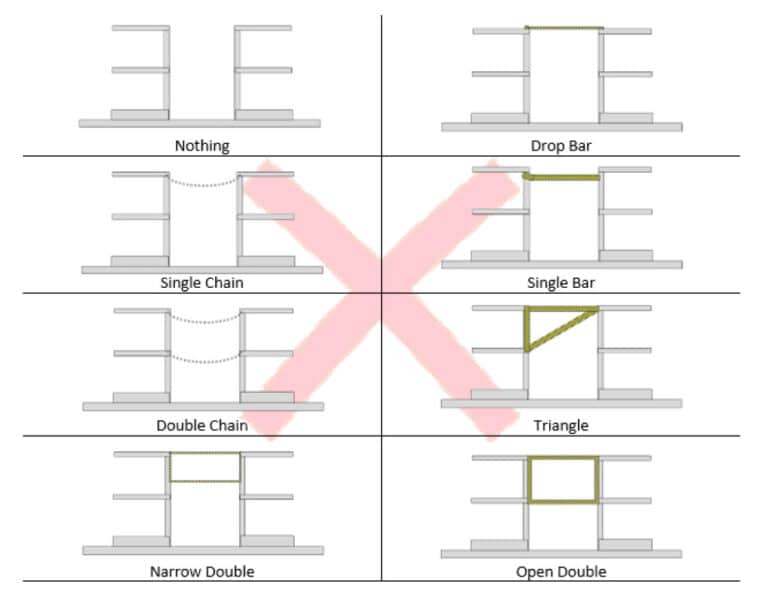
For example, if you are currently using chains, single-bar or drop-bar style gates in an access point or opening, they are no longer compliant and need to be replaced. Rusted spring-closing or compression gates no longer capable of self-closing will need repair or replacement. Gravity-closing gates can no longer be held open with bungee cords to prevent self-closure.
Start auditing walking-working surface compliance today. It’s cheaper than letting OSHA do it for you.
OSHA’s walking-working surfaces regulations are primarily addressed through safety gate standard 1910.29 and 1926.502. These standards establish the criteria employers must follow when protecting employees from falls at elevated openings and access points.
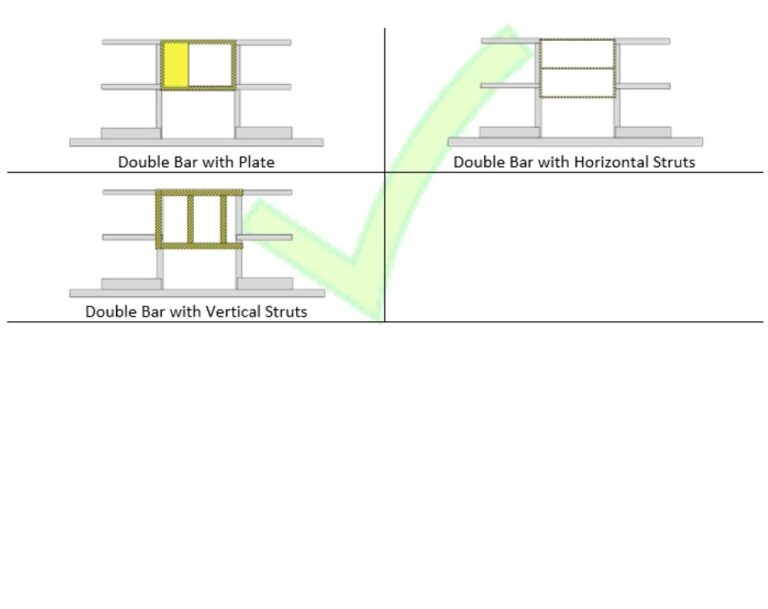
For ladderway floor openings and similar hazards, the employer must ensure guardrail systems meet one of the following requirements:
A self closing gate that slides or swings away from the opening
An offset that prevents employees from walking directly into the opening
In addition, OSHA requires that guardrail systems include:
A top rail approximately 42 inches high
A mid rail or equivalent intermediate member
Openings no greater than 19 inches in their least dimension
Protection equivalent to the surrounding guardrails
Required strength requirements and load performance
These requirements help ensure workers remain protected when accessing elevated work areas.
Swing gate requirements for fixed ladders are among the most clearly defined portions of the walking-working surfaces standard. Any fixed ladder access opening protected by guardrails must include either a self-closing gate or an offset that prevents a worker from walking directly into the opening.
A compliant OSHA swing gate used at a ladderway floor hole should swing away from the hazard and provide protection equivalent to the surrounding guardrail system. This approach supports continuous fall protection while allowing safe access to elevated areas.
Because ladder safety remains a major focus in industrial facilities, safety managers often prioritize self-closing gate systems at ladder openings to reduce the chance of human error.
OSHA’s swing gate requirements for stairs depend on the configuration of the stair landing and whether a fall hazard exists. While stairways are typically protected by rail systems, elevated landings, roof hatches, and exposed access points may require additional protection.
When a stair landing creates exposure to a floor opening or elevated edge, a safety swing gate can help maintain continuous protection. The gate should provide protection equivalent to the surrounding railing and return to the closed position automatically after use.
Facilities should evaluate each application individually to determine the most appropriate means of protection.
| Application | OSHA Requirement | Common Gate Solution | Key Considerations |
|---|---|---|---|
| Fixed Ladder Openings | Self-closing gate or offset required | OSHA safety swing gate | provide equivalent guardrail protection |
| Stair Landings | Protection required where fall hazards exist | Self-closing gate | Must provide protection equivalent to surrounding rail systems |
One of the most important aspects of modern safety gate requirements is maintaining continuous protection.
Chains, drop bars, and manually operated barriers may appear to provide protection, but they can easily be left open. A self-closing gate automatically returns to its protective position after a worker passes through the opening.
This feature helps reduce human error and strengthens safety systems at:
Ladder openings
Elevated platforms
Catwalks
Roof hatches
Industrial access points
Many facilities choose gravity-closing safety gates because they provide reliable operation without springs that can wear out, corrode, or require maintenance.
When evaluating a safety gate, it is important to understand the details OSHA expects facilities to follow.
A compliant gate includes:
A top rail that aligns with surrounding guardrails
A mid rail or equivalent intermediate member
A design that slides or swings away from the hazard
Automatic return to the closed position
Protection equivalent to the surrounding guardrail system
The gate must also withstand required force loads and maintain the same level of protection as the adjacent guardrails.
These criteria are intended to help prevent employee injury and maintain safe access throughout industrial facilities.
When evaluating a gate for your facility, consider the following:
Is the gate self-closing?
Does it swing away from the opening?
Does it provide protection equivalent to surrounding guardrails?
Is it appropriate for the environment where it will be installed?
Does it support OSHA compliant fall protection?
The Universal Gravity-Closing Safety Gate (UDG) is designed to help facilities meet OSHA requirements while delivering reliable performance in demanding industrial environments.
The following configurations generally do not meet current OSHA standards for ladderway platform hole protection and elevated access points:
Single chains used as barriers
Double chains used as barriers
Gates left open after use
Openings larger than OSHA allows
Guardrail systems without proper intermediate protection
Access openings lacking equivalent protection
Regular inspections can help identify these issues before they result in citations, compliance concerns, or workplace injuries.
OSHA’s walking-working surfaces regulations are designed to reduce fall hazards and improve workplace safety. For facilities with fixed ladder access, elevated platforms, and other elevated access points, installing the right safety gate remains one of the most effective ways to support compliance and protect workers.
Whether you’re upgrading an existing access opening or planning a new installation, Intrepid® gravity-closing safety gates provide dependable protection without the maintenance concerns associated with spring-loaded alternatives.
Contact our team today to discuss your application, request a quote, or learn more about OSHA-compliant fall protection solutions for your facility.
OSHA requires gates protecting elevated openings to be self-closing, slide or swing away from the hazard, and provide protection equivalent to surrounding guardrail systems.
Most safety gate requirements stem from OSHA safety gate standard 1910.29 and OSHA 1926.502, which address walking-working surfaces, fall protection systems, guardrails, and access openings.
Fixed ladder openings must be protected by either a self-closing gate or an offset that prevents employees from walking directly into the opening.
Not every stairway requires a gate. However, elevated stair landings and exposed access points may require additional protection where fall hazards exist.
No. OSHA no longer considers chains an acceptable substitute for a compliant self-closing gate at ladderway floor openings.

For more information regarding this new standard, visit www.intrepidindustries.com or www.osha.gov, call (281) 479-8301 or email Paxton Guidroz at pguidroz@intrepidindustries.com.
Published on BIC Magazine at: https://www.bicmagazine.com/departments/hse/new-osha-safety-gate-standard/.

Time's up