Some facilities fit neatly into standard specifications. Others do not.
An offshore platform exposed to salt spray and vibration. A manufacturing plant with tight access points around heavy machinery. A process area where chemical exposure quickly breaks down conventional materials. These are the situations where custom industrial safety solutions become more than a convenience; they become essential for maintaining workplace safety and operational reliability.
Standard plant safety equipment plays an important role across many industries. Self-closing safety gates, industrial safety barriers, cable management systems, and fall protection equipment are often available in configurations that fit common industrial layouts.
For many businesses, these solutions provide:
Standardized products work especially well in controlled manufacturing environments where layouts remain consistent and workplace hazards are predictable.
In these settings, the right tools and safety measures can improve organization, reduce accidents, and help maintain compliance without requiring extensive customization.
Facilities evolve over time. Equipment changes. Workflows shift. New machinery is added to existing spaces that were never designed to handle modern production demands.
This is where problems start appearing.
Standard barriers may block access paths. Generic guarding may fail to protect workers from unique points of operation. Conventional materials may struggle in environments exposed to chemicals, moisture, or extreme temperatures.
In harsh industrial environments, one-size-fits-all safety equipment often creates operational friction instead of solving it.
Custom structural guarding, for example, integrates directly into high-risk areas where standard guards leave gaps in protection. Tailored solutions reduce potential hazards while improving workflow efficiency at the same time.
Industrial environments place constant stress on equipment.
Chemical exposure, vibration, heat, UV radiation, and heavy use all affect long-term performance. In some facilities, metal components corrode quickly or require constant maintenance to remain functional.
This is why material selection matters so much in industrial safety product selection.
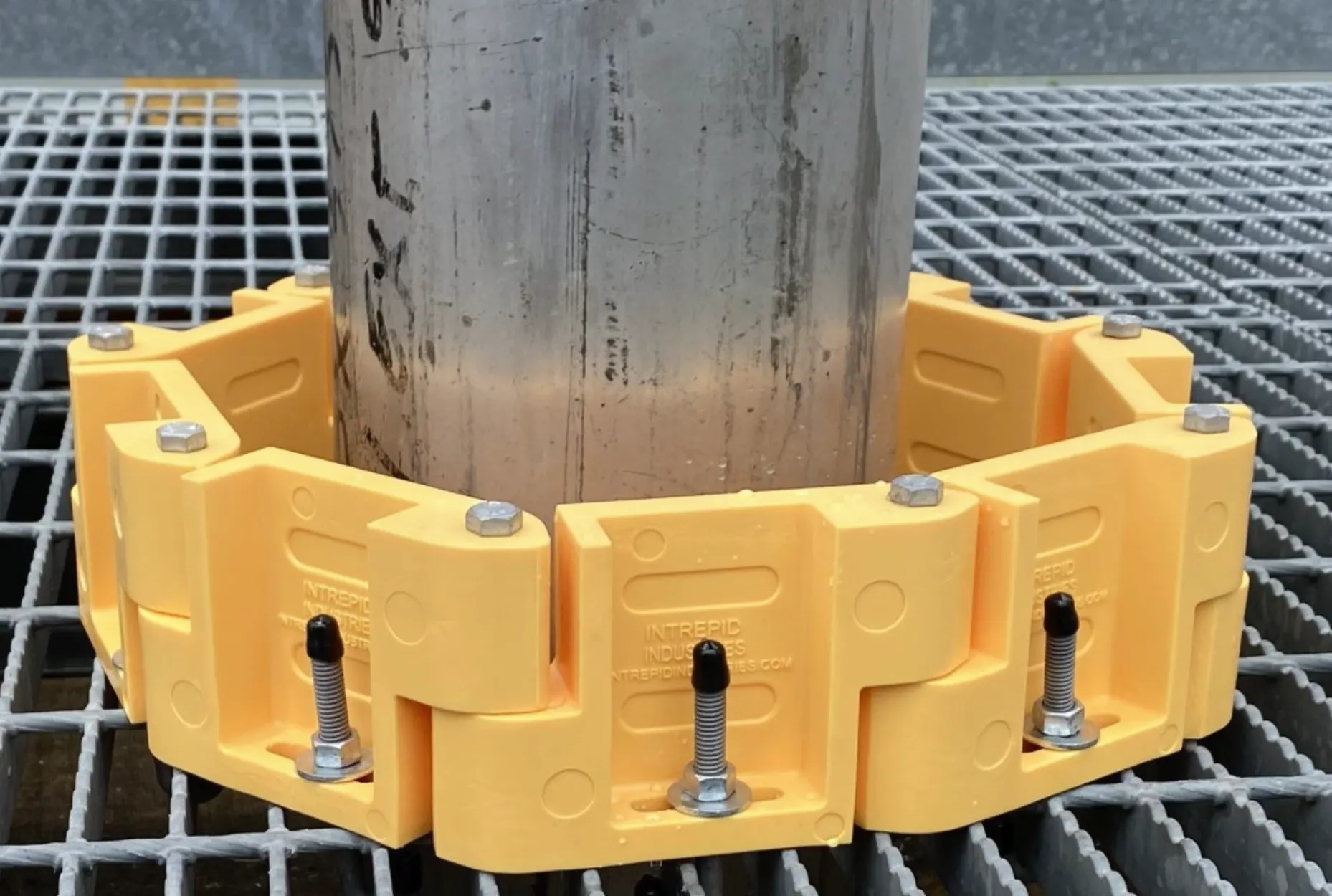
Polyurethane-based systems, for example, are often chosen for their durability in corrosive or high-impact environments. Properly engineered materials help protect workers while reducing downtime tied to equipment failure or replacement.
In facilities handling hazardous materials or toxic fumes, additional protective systems may also be required. Custom monitoring solutions, specialized barriers, and engineered access controls help minimize risks that standard products may not fully address.
Good safety systems should support the way people actually work.
Poorly placed industrial safety barriers or oversized guarding can slow production, create congestion, or increase frustration among workers. Over time, employees begin working around those obstacles, which increases risk.
Custom safety gates and custom toeboard solutions help eliminate many of these issues by adapting directly to the facility layout.
Examples include:
Tailoring safety implementations directly to workflow helps reduce human error while maintaining productivity.
One reason customized OSHA safety solutions are effective is that they reduce reliance on human behavior alone. Workers can forget procedures. Equipment can be used improperly. PPE may not always be worn consistently.
Engineering controls help create protection that remains active regardless of daily distractions.
Examples include:
Falls from heights remain one of the most serious risks in industrial settings, making fall protection equipment essential in facilities with elevated platforms or access points. OSHA requires employers to provide fall protection systems where workers are exposed to fall hazards.
Guardrails, safety nets, harnesses, and controlled access points all help protect employees while supporting long-term compliance.
Strong workplace safety depends on more than equipment alone.
A successful safety management system combines:
Facilities that continuously review their systems are better positioned to identify risks before incidents occur. This proactive approach helps businesses minimize risks while improving both productivity and workforce confidence.
Even with strong engineering controls in place, personal protective equipment remains essential in many hazardous environments.
Hard hats help protect against falling objects. Face shields and safety glasses reduce exposure to flying debris and chemical splashes. Hearing protection helps workers operating around high noise levels. Gloves, protective clothing, and specialized PPE accessories provide additional defense against workplace hazards.
Still, PPE should be viewed as one layer within a larger safety system. The strongest safety programs combine personal protective equipment PPE with engineered barriers, safer workflows, and well-designed facility layouts.
Every facility has different operational demands, hazards, and workflow challenges.
Intrepid works with industrial facilities to develop practical solutions for unique layouts and harsh environments, including custom safety gates, custom toeboard solutions, and industrial safety barriers designed around real working conditions.
Using durable materials like Instant Set Polymer (ISP), these systems are engineered to handle demanding environments while supporting long-term workplace safety and operational efficiency.
The goal is simple; create safer environments without slowing down the work that needs to get done.
Choosing between standard products and customized safety equipment depends on how closely the solution matches the way your facility actually operates.
For some environments, standard systems are the right fit. For others, tailored solutions improve safety, reduce maintenance headaches, and create better long-term performance across the workplace.
If you are evaluating facility safety upgrades or working through unique operational challenges, request a custom review or quote from Intrepid based on your facility conditions, layout, and operational needs.
Custom industrial safety solutions are safety systems designed specifically for unique facility layouts, environmental conditions, or operational hazards.
Custom safety gates are useful when standard sizes or configurations do not fit the opening, workflow, or environmental demands of the facility.
Custom toeboard solutions improve falling object protection and help secure irregular platform edges that standard systems may not fully cover.
Personal protective equipment helps protect workers from workplace hazards that cannot be fully eliminated through engineering controls alone. Hard hats, gloves, face shields, hearing protection, and protective clothing all play a critical role in reducing injuries in industrial environments.
Yes. Properly engineered OSHA safety solutions can help facilities maintain compliance while addressing unique operational and environmental challenges.